Overcome Your Gut + Digestive Issues With Ancestral Nutrition
Homemade Meat Stock
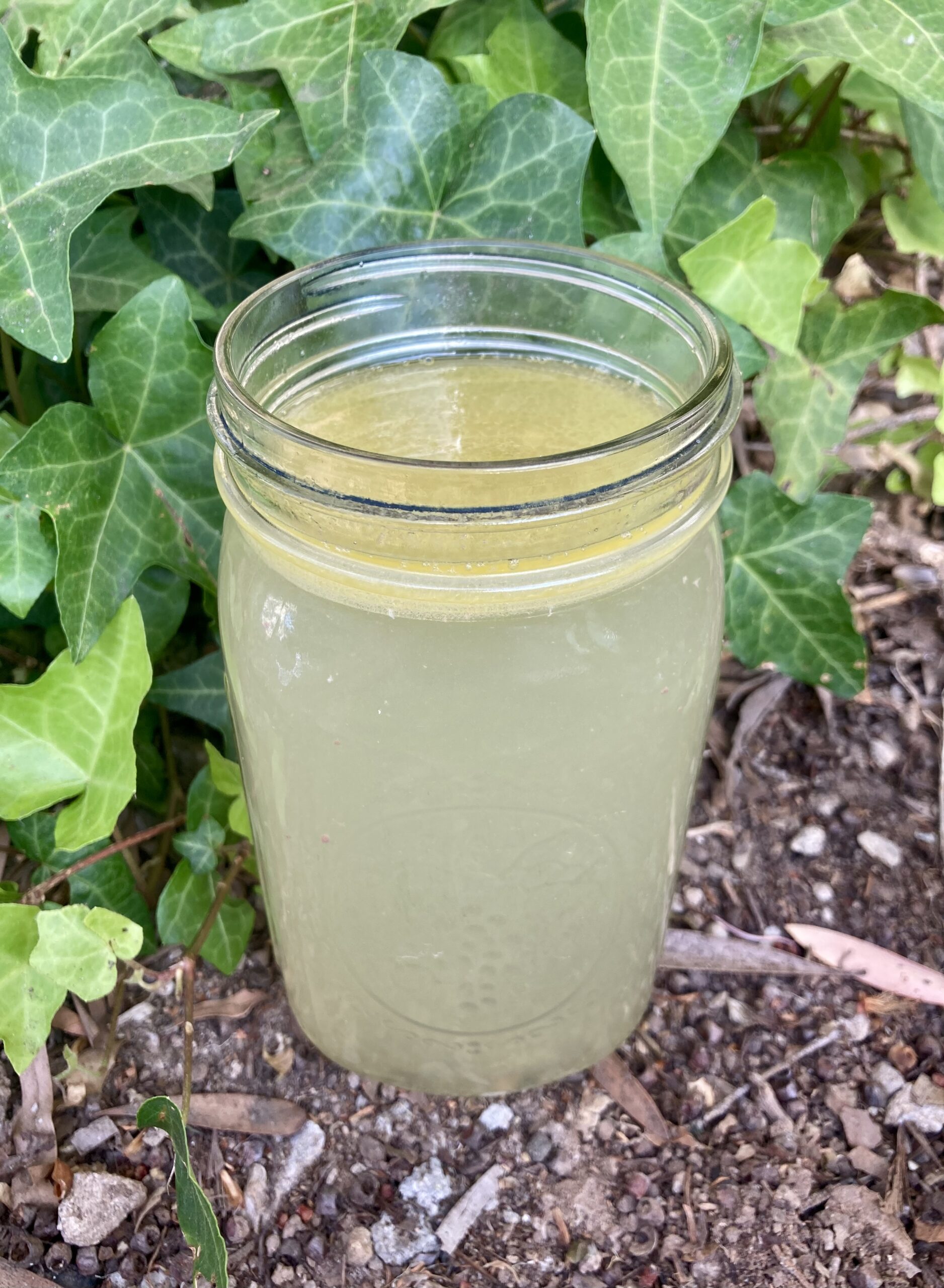
Having meat stock or bone broth daily is absolutely essential for healing your gut! Both provide lots of collagen for healing and sealing leaky gut and repairing any damage in the GI tract.
For people with very severe gut issues or histamine intolerance, meat stock is a much better option. And meat stock is what is recommended on the GAPS diet which is an incredibly powerful gut healing diet!
Meat stock is different than bone broth in a couple of ways:
- It’s only cooked on the stove top for 2-4 hours, while bone broth is cooked for 7-12 hours
- It uses more meaty cuts like a whole chicken, not just the bones from a whole chicken
- It’s way lower in histamines than bone broth because of the shorter cook time
- However it’s also lower in collagen and nutrients because of the shorter cook time so when you’re able to, I recommend you switch to bone broth (here’s my bone broth recipe)

Note if you’re very sensitive to high histamine foods, here’s how to make your meat stock the lowest in histamines possible:
- Use fresh meat and joints, not previously frozen ones
- Cook for less time, in this recipe I recommend 2-4 hours, but if you’re very sensitive you can start with 1 hour and slowly increase the cook time as you tolerate it better
- Make small batches and don’t let it sit long. The longer it sits, the more histamines you’ll get, in severe cases you can make a fresh batch each day and as you tolerate it better move to every other day, every third day and so on.
- Have less. I recommend you drink 2-5 cups of meat stock daily to heal your gut and to support optimal health. However if you’re very sensitive to histamines start with 1/4 cup and slowly work your way up
If you have histamine intolerance and want to heal it at the root, check out this YouTube video I have!
Without further ado here’s my meat stock recipe!
With love from my kitchen to yours,
Kayley
Homemade Meat Stock
Yields16 Servings Prep Time30 minsCook Time4 hrsTotal Time4 hrs 30 mins
Ingredients: Joints, tough connective tissues, meat, and fat (like marrow bones, necks, oxtail, a whole chicken, chicken pieces, chicken heads, knuckle bones, chicken feet, pig feet, etc.) Filtered water Salt to taste
Recipe:1Rinse the meat and bones off in water then add to a large pot with a tight fitting lid. Add enough water to cover the meat and bones (this typically means a ratio of 3 parts water to 1 part meat and bones. To avoid stock spilling over, make sure there is at least 1 1/2 inches of space from the top of the liquid and the top of the pot. This space and the tight fitting lid will help to minimize any water loss and therefore yield more stock.
2Bring to a covered boil over high heat. Once boiling, reduce heat to the lowest setting and let simmer for 2-4 hours. It’s done when the meats are soft and easily come off the bone.
3Once done, allow to cool uncovered for about 30 minutes, then strain the stock (saving all the bones and meats). I usually strain my stock into a 1 quart measuring flask because it is easy to pour the strained stock from there. Then transfer the stock into jars and let them sit out uncovered for another 30 minutes. Then cover with lids and transfer to the fridge.
4When the meats and bones have cooled enough to be handled, take all the meat and soft tissues off the bones and cut into bite sized pieces. Remove the bone marrow from any marrow bones and return it to the stock (you can also eat it fresh if you’d like). Save all the meat and soft tissues to add to your soups.
5Since meat stock will only keep in the fridge for about a week, I recommend making just making 1 weeks worth at a time. Especially since the longer it sits the more histamines it develops. However if you do have more than a weeks worth and don't have histamine intolerance, you can freeze the rest. To freeze, pour the stock into ice cube trays and muffin tins and place in the freezer. Once frozen transfer the stock cubes and cups into ziplock bags or tuperwares and store in the fridge. The stock cups in the muffin tins can be a little harder to get out. Running warm water along the bottom of the tray can help loosen them. Depending on how many ice cube trays and muffin tins you have, multiple rounds of freezing might be necessary. If this is the case, put all the stock you plan to freeze in jars in the fridge, until you are ready to freeze it.
6For drinking, heat up the stock or stock cubes in a small sauce pan, add salt to taste, and enjoy!
Ingredients
Ingredients: Joints, tough connective tissues, meat, and fat (like marrow bones, necks, oxtail, a whole chicken, chicken pieces, chicken heads, knuckle bones, chicken feet, pig feet, etc.) Filtered water Salt to taste

Nutrition
| Ingredients | Calories | Fat | Carbs | Protein |
| 1 Cup Meat Stock | 22 | 0.2g | 0g | 5g |
(1)
Notes:
- Nutrition is based on the products I use. I provide a nutrition table so that you can quickly check to see if your food products match or so that you can easily calculate the nutrition for any changes you want to make to the recipe. I think this helps if you have very specific diet goals and/or fitness and/or health goals. I also wanted you to be able to see exactly where I get the numbers for my nutrition facts so that you can see that they are reliable and learn more about macro breakdowns of food.
Works Cited
1. Calorie King. https://www.calorieking.com/ Accessed 3 November 2021.
2 Comments on “Homemade Meat Stock”
About Kayley

Kayley is a certified gut health nutrition coach who helps people to overcome their chronic gut and digestive issues at the root using the principles of ancestral nutrition and holistic health. (Continue Reading Here)

I wanted to add something we’ve kind of learned through trial-and-error with histamine intolerance! We usually make something that’s sort of “in between” a meat stock and a bone broth, using our pressure cooker.
I do all of the same things you list here, except that I do use frozen bones and meats (because freezing essentially “pauses” the production of histamines on meats and cooked foods). I also add a *tiny* splash of apple cider vinegar and a little bit of various dried or fresh herbs (thyme/rosemary/parsley), and I like to add a bay leaf. I don’t know, I just think it adds a little flavor or maybe brings the yummy flavors out. I pressure-cook it in our instant pot (on high pressure) for about 1 & 1/2 to 2 hours, then strain out the bones/meat pieces, and freeze the broth in wide-mouth mason jars (don’t use regular-mouth jars as they might shatter! And leave a little room for expansion during freezing; leave lids slightly loose also — at least until the broth is totally frozen).
I’ve found that at least for us, as long as I’m freezing the broth within 1-2 hours of it being completely done pressure-cooking, it doesn’t trigger any histamine reactions for myself or our youngest (the one who is the most sensitive is our youngest child). Anyways, hopefully these little tips/experiences might help someone else with suspected histamine intolerance issues!
Thank you for including tips on keeping things lower-histamine! So helpful for those of us with (suspected) MCAS.
Thank you so much for sharing your experience! That sounds great and I’m glad it works so well for you and your family! I like to add spices and acv to mine too! And great tips with freezing, I’ve definitely broken so jars by not leaving enough space at the top, or putting the lids on all the way from the start, or using too old of jars! So thanks for sharing those tips, they make a huge difference for sure 🙂