Overcome Your Gut + Digestive Issues With Ancestral Nutrition
How to Ferment Veggies
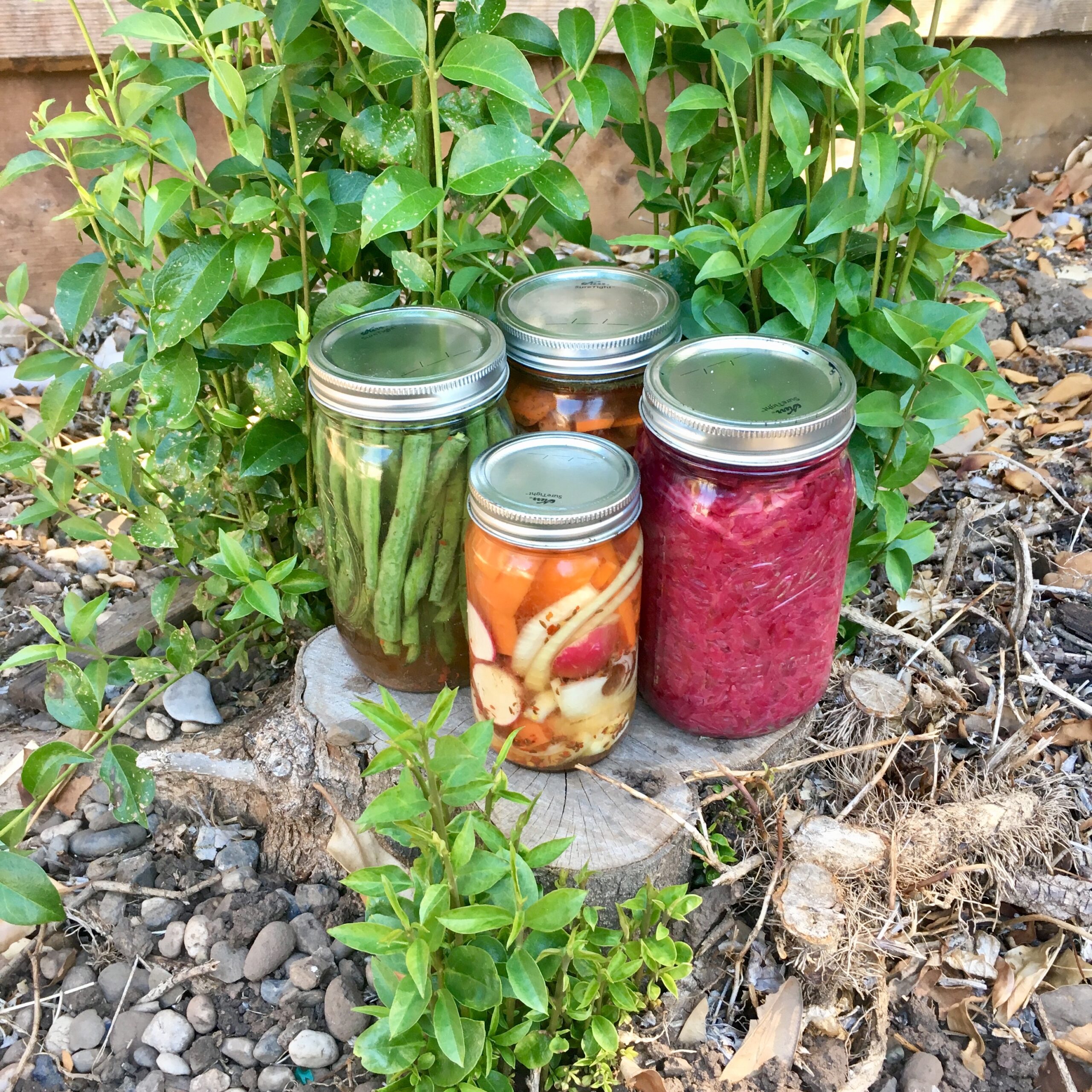
Fermenting is a very old process of preserving food that our ancestors have been using for thousands of years. Some evidence suggests that people were fermenting foods as long as 8000-9000 years ago if not longer. “During the process of fermentation, microorganisms such as bacteria, yeast or fungi convert organic compounds – such as sugars and starch – into alcohol or acids. For example, starches and sugars in vegetables and fruits are converted to lactic acid and this lactic acid acts as a natural preservative” (5). Before Refrigeration, this was an extremely helpful method of preserving foods.
However, preservation is not the only benefit of fermentation. Fermentation offers many health benefits such as increase gut health, increased digestive health, increased bioavailability of nutrients, and increased immunity.
Health Benefits of Fermented Foods
1) Increased Gut Health:
Trillions of bacteria, viruses, and fungi live in your gut (about 2-5 lbs worth). These make up your gut microbiome. While some bacteria, viruses, and fungi (or as they are collectively known: microbes) are associated with disease; others are important for the health of your gut, digestive system, immune system, weight management, and more (6).
A healthy microbiome is full of a diverse range of mostly beneficial bacteria. To increase the health of your microbiome you can:
- Eat a diverse range of foods
- Avoid sugar and artificial sweeteners
- Avoid use of antibiotics
- Breastfeed for at least the 1st 6 months of life (or I should say do this for your children to build their microbiome)
- Eat prebiotics (foods rich in fiber that feeds the good bacteria) like artichokes, bananas, asparagus, oats, and apples
- Eat probiotics, live beneficial bacteria, present in fermented foods, yogurt, and raw dairy products such as milk, cheese, and butter (6).
Fermentation occurs when microbes convert organic compounds into alcohol or acids. In the case of veggies, starches and sugars are converted into lactic acid (5). The microbes responsible for this conversion hang around and are consumed along with the veggies. When consumed, these microbes are added to your gut microbiome, strengthening it.
Without a healthy microbiome, one can experience weight gain, gas, bloating, constipation, diarrhea, heartburn, trouble sleeping, eczema, inflammation, food intolerances, and increased infections (3, 4). Therefore it is critical to maintain a healthy gut in order to optimize your health.

2) Increased Digestive Health
By increasing the health of your gut, fermented foods improve your digestion. A healthy gut means more beneficial bacteria capable of effectively breaking down/digesting food. As well as more regular eliminations and an unhindered digestive system.
Fermenting also has a more direct impact on digestion by predigesting food. When microbes convert organic compounds into alcohol or acids, they are breaking down the food into smaller easier to digest parts. “For example, fermentation breaks down the lactose in milk to simpler sugars – glucose and galactose – which, if you are lactose intolerant, can make products such as yogurt and cheese potentially easier to digest” (5).
For more tips to increase your digestion, check out this post.
3) Increased Bioavailability of Nutrients
Better digestion means greater nutrient absorption since a greater percentage of the food is broken down into small enough particles to be absorbed into the blood stream. However this is not the only way fermenting increases nutrient absorption.
Fermenting decreases antinutrients in foods. Antinutrients are compounds present in plants that inhibit the absorption of nutrients by binding to vitamins and minerals making them too bulky to be absorbed into the blood stream. Antinutrients are often broken down during fermentation, rendering them useless. Therefore less nutrient absorption is being inhibited (2).
“Fermentation can also increase the availability of vitamins and minerals for our bodies to absorb. Additionally, by boosting the beneficial bacteria in your gut, you are promoting their ability to manufacture B vitamins and synthesise vitamin K” (5).
4) Increased Immunity
“Our immune system has co-evolved along with a diverse gut flora, not only to create defenses against pathogens, but also to develop tolerance for beneficial microbes. As a consequence, the immune system and the gut microbiota developed a mutualistic relationship, regulating one another and cooperating to support each other” (1). The interconnectedness of this relationship is shown by the fact that 70–80% of the body’s immune cells are found in the gut (1).
A healthy gut microbiome promotes a strong mucosa (gut lining) which acts as a barrier against pathogens and harmful bacteria. “A lack of beneficial bacteria allows disease causing microbes to grow causing inflammation in the gut wall. If you have recently taken a course of antibiotics, probiotic foods are particularly helpful (5)“.
It also allows for better communication between the gut and immune cells and better regulation of which molecules can and can’t enter the body.
What to Eat Fermented Veggies With

My favorite way to eat fermented veggies is with salami, prosciutto, dry coppa, cheese, olives, and bone broth in my favorite lunch (recipe here).
Anyways, let’s get to some fermenting!
With love from my kitchen to yours,
Kayley
How to Ferment Veggies

For this recipe I am using a 5% brine (that is 5% salt and 95% water). This is a good standard brine that usually takes my veggies about 1-2 weeks to ferment in, depending on the heat (In hotter weather they ferment quicker). You can adjust the length of the fermentation by adjusting the salt concentration. If you want the fermentation to take longer, add more salt. If you want it to be shorter, decrease salt (But don't decrease it too much since salt is an important part of fermenting).
Start by placing the veggies and spices in a bunch of jars. Pack the jars relatively tight. I just eyeball the spices, pouring roughly 1/4-1/2 tsp of 2-4 different spices in each jar. Spices are not essential but they help prevent the growth of bad bacteria.
Next make the salt water. Combine 1.6 oz salt (2 Tbsp and 1/2 tsp) for ever 2 lbs of water (4 cups). Stir well to dissolve as much salt as possible. Then pour the salt water into the jars so that it covers all the veggies. Try to configure the veggies in a way that none of them poke above the surface to avoid bad bacterial growth. Then secure lids on all the jars and leave them in a darker cooler spot (I use a darker corner of my kitchen away from any windows).
Everyday shake your jars and then open the lids. This will prevent the growth of bad bacteria and will release any built up pressure from the fermentation process. Then use a rag or towel to wipe the jar rim and interior of the lids to prevent rust. If at any point you see a surface mold or bacteria growing, scoop it out and discard it. It's still safe to eat as long as the mold or bacteria was only on the surface and was not a bright color (white would be safe where as bright blue would not be).
After about 1-1 1/2 weeks I recommend trying your veggies. When they are ready is up to your personal preference. When they have reached a point where you don't want them to ferment anymore, you can transfer them to the fridge to drastically slow the fermentation (once in the fridge you no longer need to do your daily shake and lid removal). I typically eat them over a few different stages of fermentation then transfer them to the fridge 1-2 weeks after I started eating them.
Ingredients
Works Cited
1. Ades, Sara. “How The Gut Microbiota Influences Our Immune System.” Neurohacker Collective. 8 July 2019. https://neurohacker.com/how-the-gut-microbiota-influences-our-immune-system
2.Anarson, Atli. “How to Reduce Antinutrients in Foods.” Healthline. 4 June 2017. https://www.healthline.com/nutrition/how-to-reduce-antinutrients
3. Dix, Megan. “What’s an Unhealthy Gut? How Gut Health Affects You.” Healthline. 2 July 2018. https://www.healthline.com/health/gut-health
4. Dr. Bruce Fife. The Stevia Deception. Colorado: Piccadilly Books. 2017. Print.
5. Lewin, Jo. “The Health Benefits of Fermenting.” BBC Good Food. Accessed 8 May 2020. https://www.bbcgoodfood.com/howto/guide/health-benefits-offermenting
6. Robertson, Ruairi . “Why the Gut Microbiome Is Crucial for Your Health.” Healthline. 27 June 2017. https://www.healthline.com/nutrition/gut-microbiome-and-health
About Kayley

Kayley is a certified gut health nutrition coach who helps people to overcome their chronic gut and digestive issues at the root using the principles of ancestral nutrition and holistic health. (Continue Reading Here)

